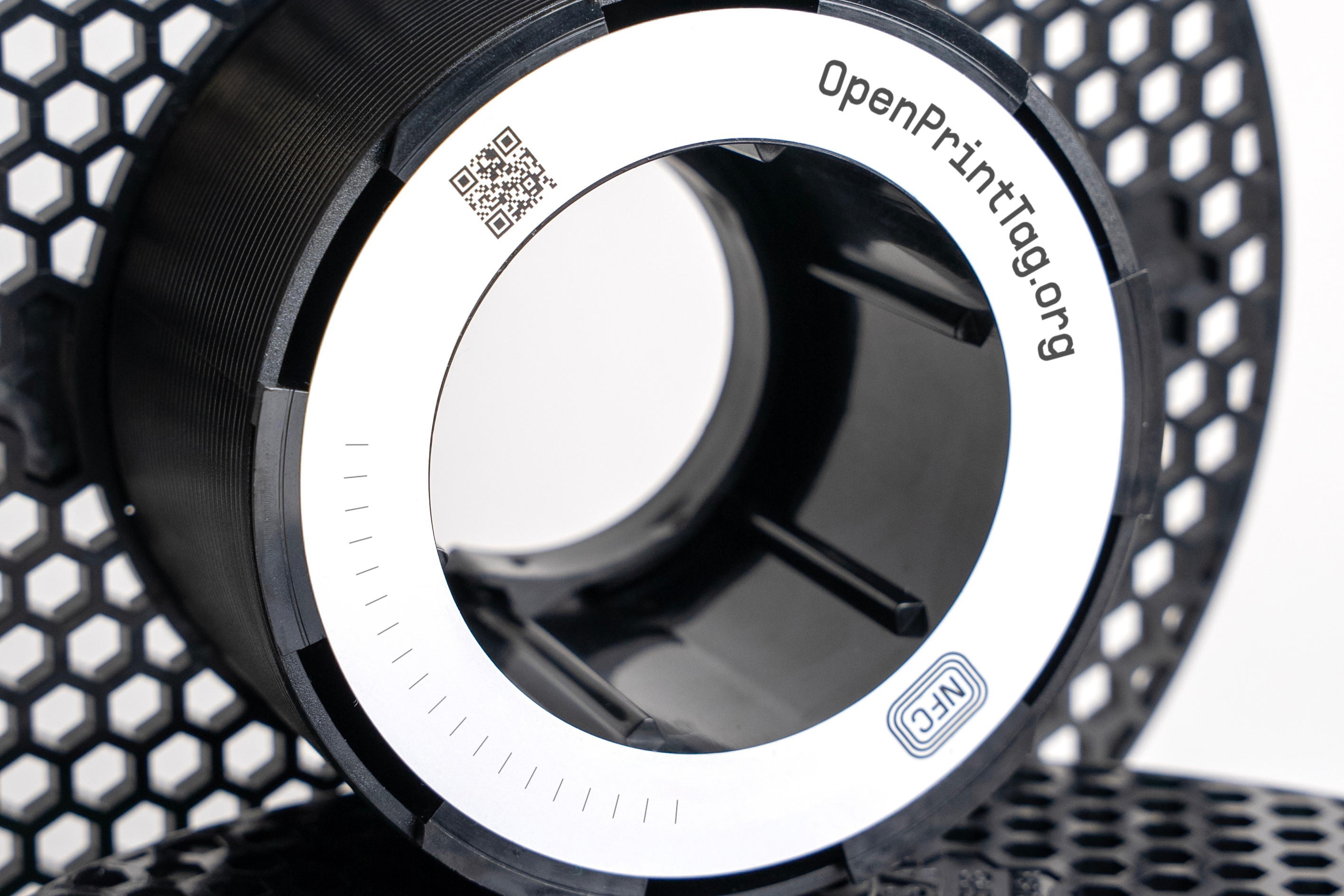
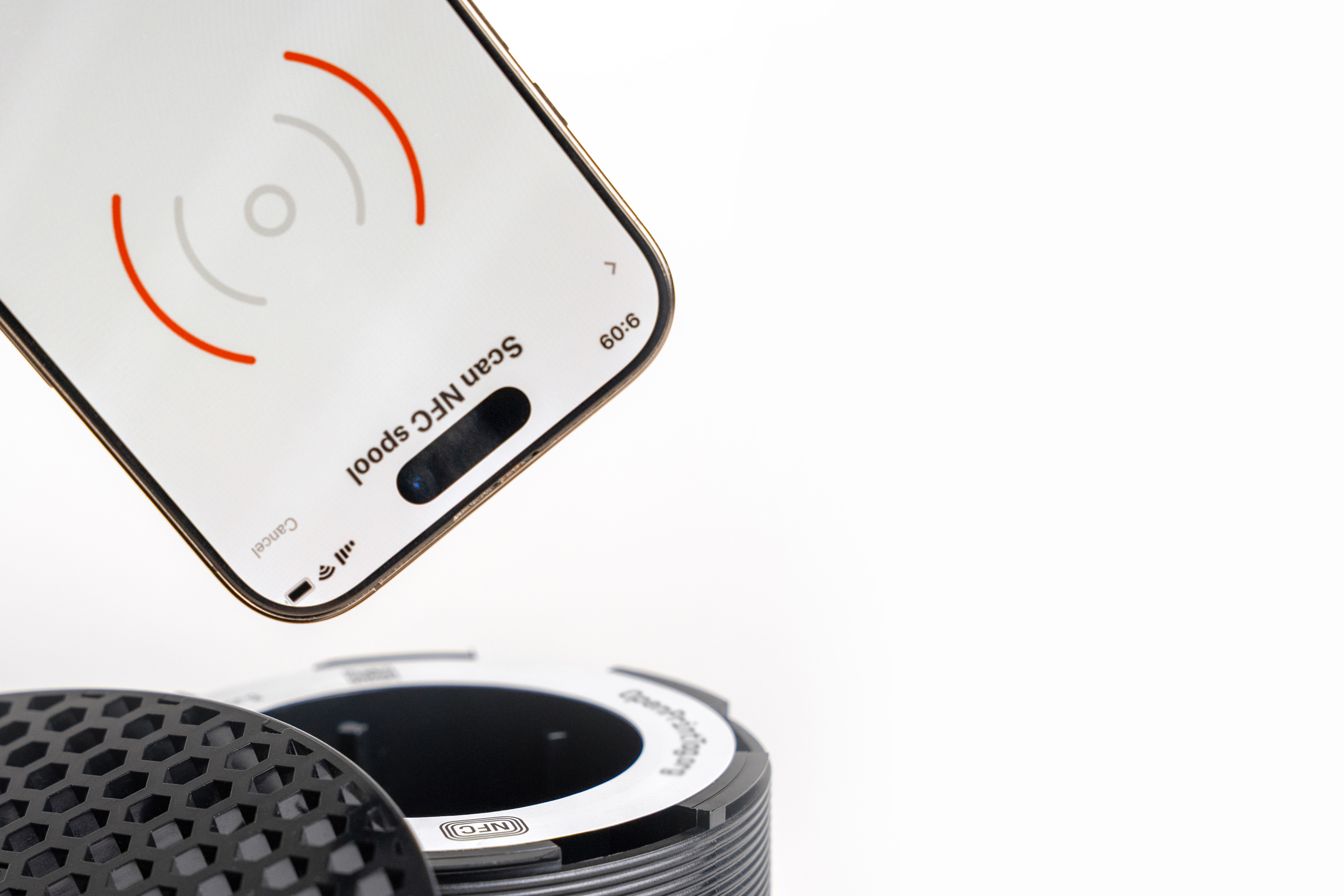
An open-source initiative by Prusa Research creating a single smart spool standard that works across all brands
and ecosystems. This allows printers and users to read and write data
directly on any spool, making 3D printing more reliable and intuitive
for everyone.
100%
Open Source
Universal
Compatibility
Future
Proof
Interested companies and groups
Why Do We Need Smart Spools?
3D printers have become incredibly user-friendly, but interaction with filament is still a very manual process. To improve the user experience and streamline the workflow, we need smart spools.
A smart spool carries all the important information about the material and its workflow, unlocking key features:
Material Recognition
Instantly identifies the material type and color, significantly reducing user error and leading to a simpler, more reliable workflow.
Live Data Tracking
Real-time data tracking, such as the amount of remaining filament, so you always know the exact status of your material.
Inventory Management
Enables effortless inventory management and full traceability by allowing you to log custom data.
The Few "Smart" Spools Today
Some smart spools already exist, but they lack the core principles of universality and interoperability. It's like every brand suddenly decided to use a different filament diameter.
🔒
Locked Proprietary Ecosystems
Smart spools are often locked to their specific hardware and filament. This makes them unusable with any third-party machines, forcing users into a closed ecosystem.
⚠️
Cloud Dependency
Many smart spools just refer to an online database, forcing you to rely on the manufacturer's cloud service. No internet? Your "smart" spool becomes dumb.
🗑️
Read-Only & One-Time-Use
Current Smart Spools offer little to zero reusability. This read-only design prevents any updates to live data, and once the filament is depleted, you have no choice but to throw the 'smart' spool away.
Xxx Viral Mms Best |work| Today
One of the earliest examples of viral content is the "All Your Base Are Belong to Us" video, which surfaced in 2000. However, it was the 2006 video "The Evolution of Dance" by Judson Laipply that catapulted viral content into the mainstream. The video, which showcased Laipply's comedic dance routine, was shared across social media platforms, garnering millions of views and cementing its place in internet history.
The 2016 US presidential election highlighted the role of viral content in shaping public opinion. Social media platforms were criticized for allowing the spread of fake news and propaganda, which some argued contributed to the election outcome. xxx viral mms best
Social media influencers have also become key players in popular media. These individuals, who have built large followings on platforms like Instagram, YouTube, and TikTok, have become tastemakers and trendsetters. They often partner with brands to promote products or services, and their endorsements can have a significant impact on consumer behavior. One of the earliest examples of viral content
The concept of viral content dates back to the early days of the internet, but it wasn't until the mid-2000s that it started to gain mainstream attention. Websites like YouTube, Facebook, and Twitter emerged as major players in the online space, allowing users to easily create, share, and discover content. The 2016 US presidential election highlighted the role
Social media platforms have significantly impacted the way we consume popular media. Traditional media outlets, such as television and print publications, have had to adapt to the changing landscape.
The rise of streaming services like Netflix, Hulu, and YouTube Premium has transformed the way we consume video content. These platforms have enabled users to access a vast library of content, including original series and movies, on-demand.