Parasited+little+puck+parasite+queen+act+1+upd Link Official

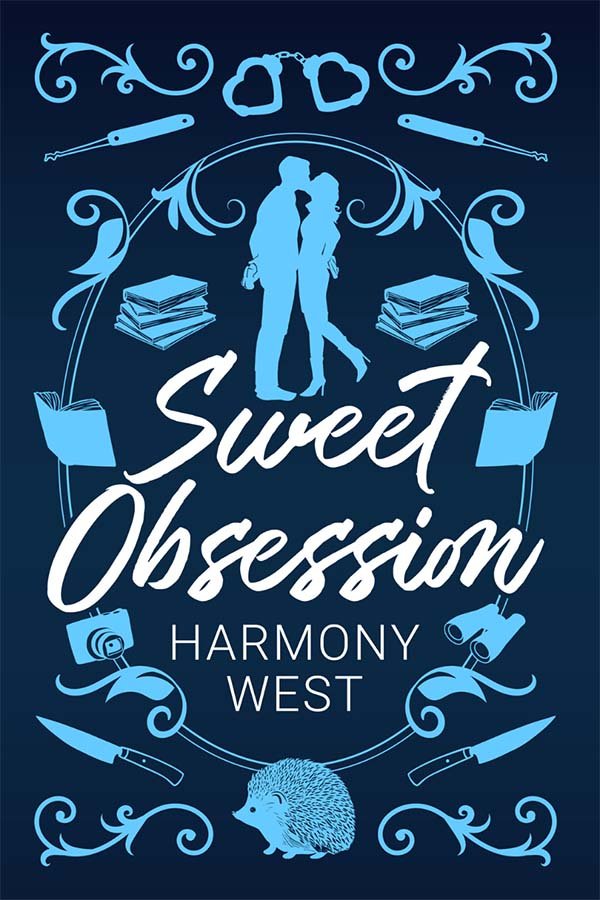
Boy next door ... or stalker next door?

“The first boy I ever loved might be a murderer.”

After Sophie Mariano disappeared, I took the perfect life she left behind—the spot on the cheer squad, the friends, and the gorgeous boyfriend.

But now Sophie’s brother, Miles, is back, and he’s looking for his missing sister. He’s staying with his grandma in my duplex, which means there’s nothing but a door separating us each night. I should be afraid of him—everyone thinks he killed his sister. But I’m not afraid of Miles. I’m afraid of how much I want him.

There is one person I’m afraid of, though: whoever’s sending me creepy, anonymous messages and photos. They’re following me around town, to work, to my house. According to Miles, the same thing happened to Sophie before she disappeared. Whoever was stalking her is now stalking me.

The DMs escalate to vandalism, blackmail, break-ins, and death threats. My stalker wants to ruin my life. They want to break me. They want me dead. If Miles and I don’t figure out what happened to Sophie and who’s been stalking us both …

I’ll be the next girl to disappear.

Bad boy, hate to love, cohabitation, slow burn, second chance, small town, love triangle

Trigger Warnings

STALKING
GASLIGHTING
OMD
DEATH THREATS
BLOOD
VIRGIN HEROINE
STRANGULATION
STABBING
BREATH PLAY
GRAPHIC VIOLENCE
PUBLIC SEXUAL ACTIVITIES
CHEATING
DEATH
EMOTIONAL ABUSE
MENTIONS OF HOMICIDE + SUICIDE
ABUSIVE RELATIONSHIP

Other Standalones

Parasited+little+puck+parasite+queen+act+1+upd Link Official

The diverse themes encapsulated by "parasited+little+puck+parasite+queen+act+1+upd" suggest a deep-seated interest in exploring the nuances of social dynamics, economic disparity, and the ways in which individuals navigate systems that often seem designed to oppress or stratify. Through films like "Parasite" and potentially through characters or narratives like "Little Puck" and "Parasite Queen," we gain not only entertainment but also mirrors held up to our societies, prompting crucial discussions about equity, morality, and our collective future.

The global phenomenon that is Bong Joon-ho's "Parasite" has left an indelible mark on the cinematic world, offering a scathing critique of class disparity and the lengths to which individuals will go to transcend their socio-economic standings. This film, alongside mentions of "Little Puck," "Parasite Queen," and theatrical acts, invites an exploration into how societies perceive parasitism, both literally and metaphorically. parasited+little+puck+parasite+queen+act+1+upd

The intersection of these references—cinematic, theatrical, and perhaps literary—points to a broader cultural conversation about parasitism, not just as a biological phenomenon but as a metaphor for certain types of social relationships. This conversation challenges viewers and readers to reflect on their complicity in systems of inequality and to consider the complex interplay between exploitation and survival. This film, alongside mentions of "Little Puck," "Parasite

"Parasite," a 2019 black comedy thriller, tells the story of the Kims, a poor family who scheme their way into the lives of a wealthy family, the Parks. The film masterfully uses its characters to highlight the blurred lines between exploitation and symbiosis in a class-stratified society. This dynamic mirrors real-world anxieties about the economic divide, raising questions about the morality of social climbing and the inherent value of labor. "Parasite," a 2019 black comedy thriller, tells the

While specific details about "Little Puck" and "Parasite Queen" are not provided, their mention alongside "Parasite" and an "Act 1" suggests a narrative or performance that explores similar themes of class, exploitation, and perhaps rebellion or survival strategies within a stratified society. These could be characters or titles in a play, novel, or even episodes in a series, designed to probe the audience's perceptions of value, morality, and the human condition.

The term "parasite" typically refers to an organism that lives on or in a host organism and gets its food at the expense of its host. Translated into a social context, the term can describe individuals or groups who benefit from the labor or resources of others without contributing equitably in return. This concept is central to discussions around class, wealth distribution, and social equity.
The diverse themes encapsulated by "parasited+little+puck+parasite+queen+act+1+upd" suggest a deep-seated interest in exploring the nuances of social dynamics, economic disparity, and the ways in which individuals navigate systems that often seem designed to oppress or stratify. Through films like "Parasite" and potentially through characters or narratives like "Little Puck" and "Parasite Queen," we gain not only entertainment but also mirrors held up to our societies, prompting crucial discussions about equity, morality, and our collective future.

The global phenomenon that is Bong Joon-ho's "Parasite" has left an indelible mark on the cinematic world, offering a scathing critique of class disparity and the lengths to which individuals will go to transcend their socio-economic standings. This film, alongside mentions of "Little Puck," "Parasite Queen," and theatrical acts, invites an exploration into how societies perceive parasitism, both literally and metaphorically.

The intersection of these references—cinematic, theatrical, and perhaps literary—points to a broader cultural conversation about parasitism, not just as a biological phenomenon but as a metaphor for certain types of social relationships. This conversation challenges viewers and readers to reflect on their complicity in systems of inequality and to consider the complex interplay between exploitation and survival.

"Parasite," a 2019 black comedy thriller, tells the story of the Kims, a poor family who scheme their way into the lives of a wealthy family, the Parks. The film masterfully uses its characters to highlight the blurred lines between exploitation and symbiosis in a class-stratified society. This dynamic mirrors real-world anxieties about the economic divide, raising questions about the morality of social climbing and the inherent value of labor.

While specific details about "Little Puck" and "Parasite Queen" are not provided, their mention alongside "Parasite" and an "Act 1" suggests a narrative or performance that explores similar themes of class, exploitation, and perhaps rebellion or survival strategies within a stratified society. These could be characters or titles in a play, novel, or even episodes in a series, designed to probe the audience's perceptions of value, morality, and the human condition.

The term "parasite" typically refers to an organism that lives on or in a host organism and gets its food at the expense of its host. Translated into a social context, the term can describe individuals or groups who benefit from the labor or resources of others without contributing equitably in return. This concept is central to discussions around class, wealth distribution, and social equity.

Parasited+little+puck+parasite+queen+act+1+upd Link Official

eBooks enrolled in Kindle Unlimited are only available through Amazon.

Don’t have a Kindle?

  1. Purchase the ebook you’d like to read on a non-Kindle device through Amazon.

  2. Email your Amazon proof of purchase to Harmony's assistant, at

  3. Receive your personalized, one-time download link that will enable you to read on your e-Reader of choice.

Have a smart phone?

You can get the Kindle App on your phone and start reading instantly. CLICK HERE to learn more on Amazon and download the app.

Please note:

This is ONLY for ebooks. Meaning, you must purchase the ebook through Amazon to get a read anywhere link for an ebook. Other formats purchased (such as a paperback) do not qualify to receive an eBook.