
Mr X Hdhub4u Upd Free 2021 -
secure communication for everyone
secure communication for everyone
Current version: 0.6.7a
Release notes
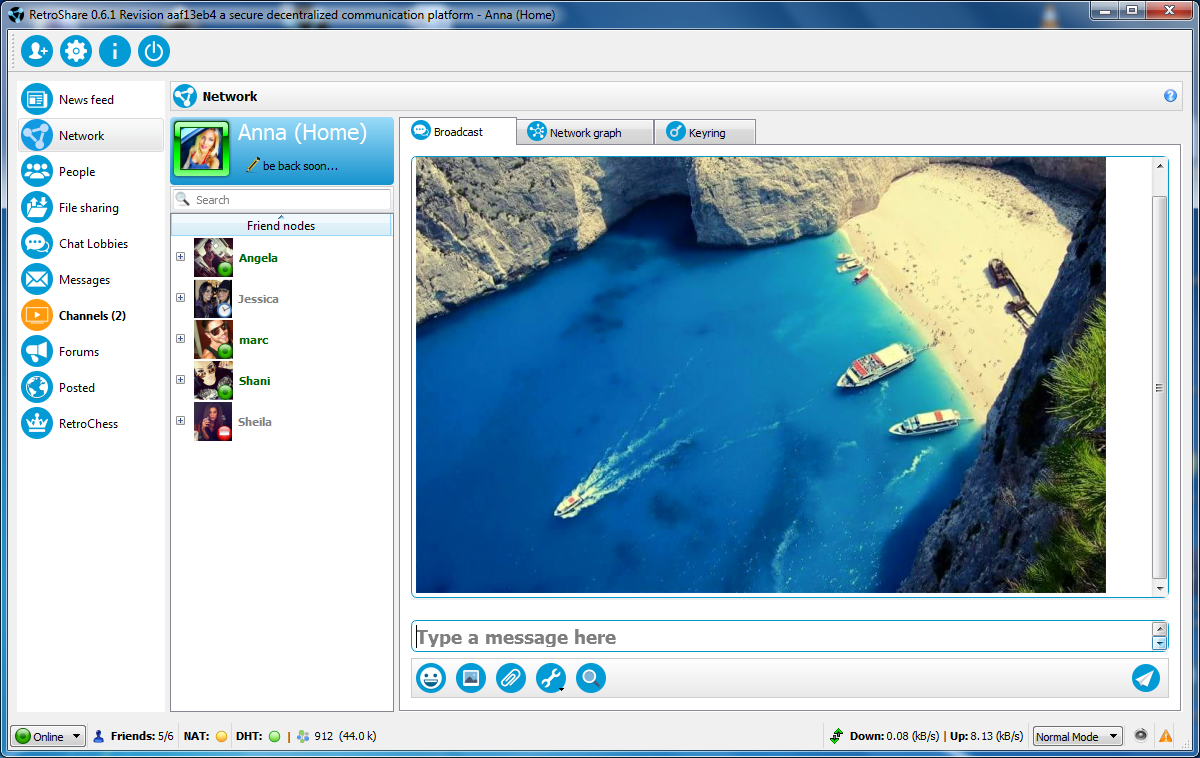
Retroshare establish encrypted connections between you and your friends to create a network of computers, and provides various distributed services on top of it: forums, channels, chat, mail... Retroshare is fully decentralized, and designed to provide maximum security and anonymity to its users beyond direct friends. Retroshare is entirely free and open-source software. It is available on Android, Linux, MacOS and Windows. There are no hidden costs, no ads and no terms of service.
In the dim glow of late-night forums and comment sections, a string of characters can become legendary. For a generation raised on peer-to-peer networks and free-streaming promises, the unadorned phrase “mr x hdhub4u upd free” reads like an incantation — a breadcrumb left by someone who thought they’d found a better, faster, cheaper way to watch. Beyond the trolls and piracy debates, that fragment reveals something deeper about how people seek entertainment, information, and community online. A Culture Built on Discovery The early 2000s mainstreamed file sharing. Napster’s music swaps and BitTorrent’s torrent files taught millions to treat content as something to find, grab, and keep. As legal streaming became more fragmented — different shows locked behind different subscriptions — incentives to find a single, free source only grew. “Mr X” and sites like “hdhub4u” became shorthand for convenience: a single place that promised the latest releases, often with English subtitles and decent quality.
But there’s emotion linked to discovery as well. Finding a fresh release in a hidden corner of the web can feel like joining an inside joke. Sharing a working link with friends cultivates a sense of belonging. For some communities, maintaining archives of obscure or out-of-print films and shows is a form of cultural preservation. The appeal comes with trade-offs. File-sharing sites often host low-quality copies, mislabeled files, or worse—malware and invasive ads. The social cost is real, too: creators and smaller production houses lose revenue that helps fund future projects. There’s also a safety risk; visiting dubious sites can expose users to phishing, drive-by downloads, or legal action in some jurisdictions. mr x hdhub4u upd free
What’s striking isn’t just the illegality. It’s the customer experience these sites offered before streaming platforms perfected it: searchable catalogs, user comments, subtitles, and community recommendations. For many users, those sites functioned as informal curators—someone to point the way when official platforms felt scattered or prohibitively pricey. Underneath the shorthand are technical innovations and adaptations. Content scraping, mirror sites, magnet links, and decentralized distribution methods kept material available even as individual domains were taken down. Communities migrated quickly, using coded phrases and private groups to share working links. The resilience of these ecosystems shows how tech-savvy users adapt to restrictions by building redundancies and social systems of trust. Why People Still Look There are pragmatic reasons for the search. Subscription fatigue is real: between multiple streaming services, sports packages, and premium channels, costs can exceed what many households consider reasonable. Regional licensing also blocks access to content in many countries, pushing users toward alternative sources. Accessibility matters too—subtitle availability, dubbed versions, or file formats that work on older devices can make unofficial sources more usable than legal ones. In the dim glow of late-night forums and
Efforts to combat piracy have evolved beyond takedown notices. Platform consolidation, global licensing deals, and ad-supported free tiers aim to reduce demand for unauthorized sources. Meanwhile, cybercrime actors keep exploiting gaps with sophisticated schemes. The streaming landscape is unlikely to revert to the fragmented Wild West entirely. Broad consolidation and ad-supported models have made much content more convenient and affordable. But as long as gaps remain—whether because of regional restrictions, cost, or discoverability—people will keep looking for alternatives. A Culture Built on Discovery The early 2000s
The ongoing tension will shape how content is distributed: smarter, more user-friendly legal services; improved global licensing; and perhaps new technical solutions for fair compensation while preserving user choice. Creators and platforms that prioritize accessibility, discoverability, and reasonable pricing stand the best chance of reducing the appeal of underground links. “Mr X hdhub4u upd free” is more than a search query or a memory of a particular site. It’s shorthand for a moment when users improvised around the limits of official systems to access culture on their own terms. It’s a reminder that distribution, pricing, and usability matter as much as content itself. And it’s a nudge: if legal services keep making things easier and more equitable, the need to seek out risky alternatives will diminish—without anyone having to whisper the names of underground sites in the comment section.
— End —
Retroshare allows you to create a network of computers (called nodes). Every user has it's own node. The exact location (the IP-address) of nodes is only known to neighbor nodes. You invite a person to become a neighbor by exchanging your Retroshare certificates with that person.
Links between nodes are authenticated using strong asymmetric keys (PGP format) and encrypted using Perfect Forward Secrecy (OpenSSL implementation of TLS).
On top of the network mesh, Retroshare provides services to securely and anonymously exchange data with other nodes in the network beyond your own friends.
There is no catch. Retroshare is provided free of charge and does not generate any kind of money. It is the result of hard work that is only driven by the goals of providing a tool to evade censorship.
The only catch is that you will need to build your own network: in order to use Retroshare, you have to recruit friends and exchange certificates with them, or join an existing network of friends.
Retroshare was founded by drbob in 2006, as a platform to provide "secure communications and file sharing with friends". Since then other developers joined and steadily improved the software. Retroshare v0.6 is a new milestone which is based on experience from previous releases. A remarkable new component in Retroshare v0.6 is the generic data transportation system (internally named GXS) which abstracts the distribution of authenticated data throughout the network. On top of GXS, Retroshare provides distributed forums, movie channels with comments, and asynchronous messaging.